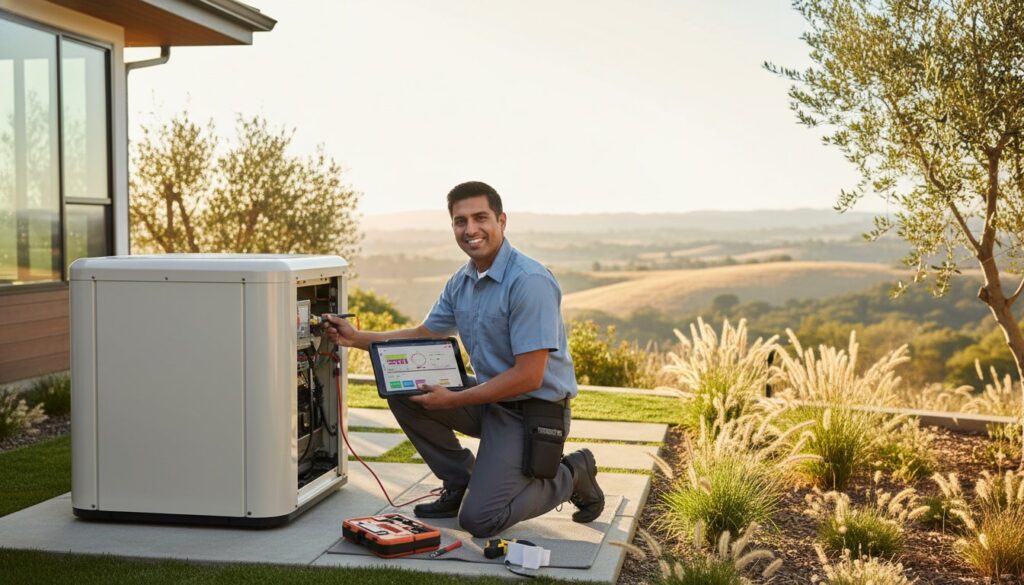
Could your HVAC system be the primary reason your monthly PG&E bill feels like a second mortgage payment? Many homeowners throughout the Bay Area find themselves stuck between rising utility costs and the fear of a system failure during a summer heatwave. It’s a common frustration, especially as new 2026 regulations change how we must maintain our furnaces and heat pumps.
Scheduling an annual HVAC tune up Bay Area is the most effective way to protect your investment and keep your monthly expenses under control. A professional calibration from Bay Energy Heating and Air ensures your equipment runs at peak efficiency, which can lower energy use by 15% to 20% according to Department of Energy data. Beyond the savings, it provides the peace of mind that your family is safe from carbon monoxide leaks and unexpected equipment failures.
This 2026 maintenance guide explores the latest Title 24 standards, explains the transition to new A2L refrigerants, and shows you exactly how to extend the lifespan of your specific system.
Key Takeaways
- Learn the critical difference between basic DIY filter changes and professional system calibration that ensures mechanical and electrical safety.
- Discover how an annual HVAC tune up Bay Area can lower your PG&E utility costs by up to 30% by restoring factory-spec efficiency.
- Understand how to protect your outdoor condenser coils from the unique corrosive effects of coastal salt air and the diverse microclimates of Northern California.
- Review the specific technical checklist our experts use to audit electrical components like capacitors and contactors to prevent unexpected summer breakdowns.
- See how consistent professional maintenance can extend the operational lifespan of your furnace or heat pump from 12 years to nearly two decades.
What is a Professional HVAC Tune-Up and Why is it Essential in 2026?
A professional HVAC tune-up is far more than a simple surface cleaning. It is a comprehensive inspection, technical cleaning, and precision calibration of every component within your heating and cooling system. When we perform an annual HVAC tune up Bay Area, our goal is to align your equipment as closely as possible with its original factory specifications. This process ensures that every motor, sensor, and electrical connection operates at peak performance, preventing the slow degradation that leads to high utility bills and system failure.
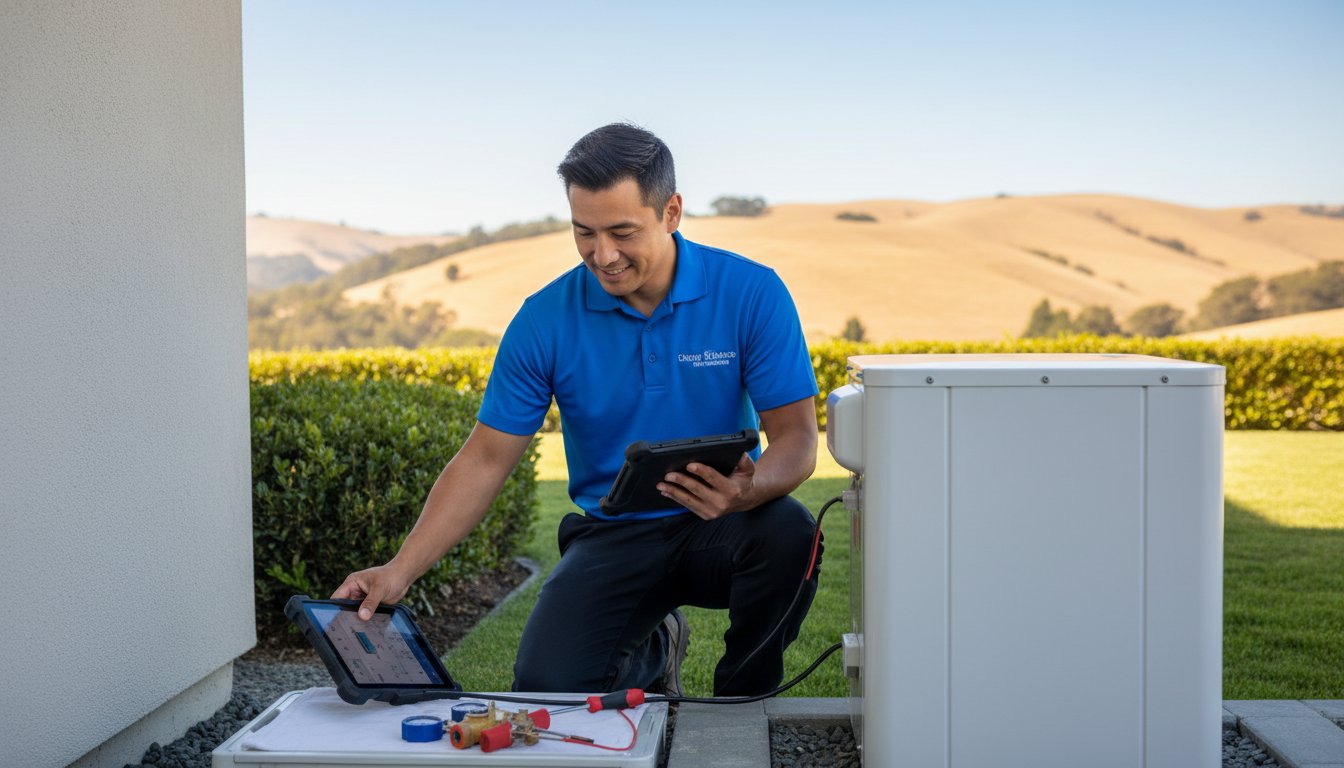
Many homeowners confuse basic DIY tasks with professional maintenance. While changing your air filters is a vital part of home care, it does not replace the need for an expert technician. Professional calibration involves testing refrigerant pressures, auditing electrical components, and verifying the mechanical integrity of the blower assembly. Modern HVAC systems are sophisticated machines. They require specialized diagnostic tools to measure performance accurately, something a visual check simply cannot accomplish.
The unique geography of the San Francisco Bay Area adds another layer of complexity to system care. Our local microclimates create specific stresses that vary by county. For example, the salt-heavy air and consistent fog in Marin County can accelerate corrosion on outdoor condenser coils. Conversely, the intense summer heat in Solano and Contra Costa counties forces systems to run for extended cycles, increasing wear on motors and capacitors. Regular professional oversight accounts for these environmental factors, protecting your investment from the elements.
The Difference Between a Tune-Up and a Repair
Maintenance is proactive, while a repair is reactive. The primary objective of a tune-up is to identify and resolve minor issues before they escalate into significant failures. Catching a weakened capacitor during a scheduled visit is a simple, low-cost fix. If left unaddressed, that same component will likely fail during a heatwave, leading to an expensive emergency service call. Additionally, most manufacturers require proof of regular maintenance to keep your equipment warranty valid. Consistent care preserves your coverage and keeps the system running at its intended efficiency level.
The 2026 Efficiency Landscape
As of 2026, energy standards for residential climate control have become significantly more stringent. Modern high-efficiency SEER2 equipment relies on complex digital controls and variable-speed technology. These systems require precise digital diagnostics rather than old-fashioned mechanical adjustments. In Alameda and Contra Costa counties, older gas furnaces also face new safety and emission requirements. A professional inspection ensures these units remain compliant with California’s evolving energy goals while verifying that no hazardous conditions, such as heat exchanger cracks, have developed over time.
The Bay Energy Technical Checklist: What Happens During Your Visit?
A professional service visit is a methodical, data-driven process designed to eliminate guesswork. When we perform an annual HVAC tune up Bay Area, our technicians follow a rigorous technical checklist that targets every potential point of failure. This structured approach moves from the electrical heart of the system to the mechanical components that move air through your home. We don’t just look at the equipment; we measure its performance against laboratory standards.
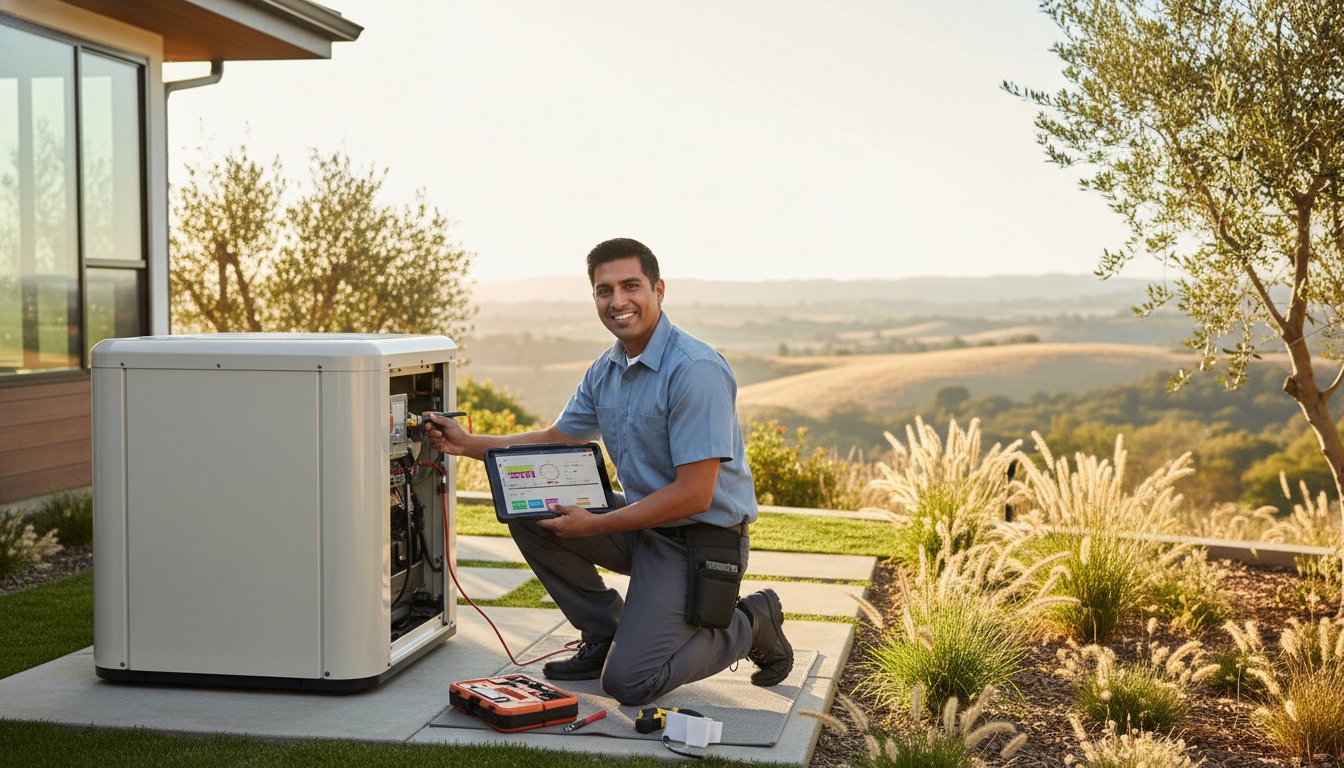
The electrical audit is the most critical phase for long-term reliability. We test capacitors to ensure they meet their specific microfarad ratings and inspect contactors for signs of pitting or burning. High-voltage connections can loosen over time due to thermal expansion and contraction. We tighten these connections to prevent electrical arcing, which is a leading cause of control board failures. Precision here ensures the system starts reliably every time the thermostat calls for air.
Airflow optimization is equally important for efficiency. According to the U.S. Department of Energy, regular maintenance of your air conditioner must include cleaning the evaporator and condenser coils. When these coils are coated in dust or debris, they can’t transfer heat effectively. This causes the blower motor to work harder and draw higher amperage. We measure this amperage to verify the motor is operating within its safe design limits, preventing a premature burnout during a Solano County heatwave.
Specialized Checks for Heat Pumps and Mini-Splits
Modern heat pumps and ductless mini-splits require a higher level of technical precision. We verify the refrigerant charge using digital gauges, as even a small deviation in pressure can significantly degrade heating and cooling performance. We also test the reversing valve to ensure it switches modes without sticking. For ductless units, we focus on cleaning the condensate lines and pans to prevent water damage to your interior walls. If you notice your system struggling to switch between modes, our HVAC repairs & troubleshooting services can diagnose the issue before the season shifts.
Furnace and Gas Safety Inspections
Safety is our primary concern for gas-fired systems. We perform a detailed inspection of the heat exchanger, looking for microscopic cracks that could allow carbon monoxide to enter your living space. We also calibrate gas pressure to ensure a clean, efficient burn that minimizes fuel waste and soot buildup. A flame sensor is a critical safety device that detects the presence of a flame to ensure the gas valve doesn’t stay open if the furnace fails to ignite. Keeping this sensor clean prevents the frustrating lockout cycles that often leave homeowners in the cold.
Why the SF Bay Area Climate Demands Regular HVAC Maintenance
The San Francisco Bay Area does not have a single climate. It is a collection of distinct microclimates, each placing different stresses on your mechanical systems. An annual HVAC tune up Bay Area must be tailored to these specific environmental factors to be effective. Whether you live in the fog-drenched hills of Marin or the sun-scorched valleys of the East Bay, your equipment faces challenges that standard maintenance schedules often overlook. Local expertise is required to bridge the gap between general factory recommendations and the reality of Northern California weather.
Coastal proximity introduces the “Salt Air Challenge.” For homes in Sausalito, Pacifica, or Richmond, salt-laden mist is a constant threat. This salt settles on the delicate aluminum fins of outdoor condenser coils, acting as a catalyst for rapid corrosion. Over time, this oxidation creates a barrier that prevents heat transfer, forcing the compressor to run longer and hotter. Specialized coil cleaning during a professional visit removes these deposits, preserving the metal and maintaining the system’s ability to shed heat efficiently.
Inland areas like Walnut Creek, Concord, and Livermore face the opposite extreme: intense thermal stress. During summer spikes where temperatures exceed 100°F, air conditioners often run for 10 to 14 hours straight. This high duty cycle tests the limits of every capacitor and motor bearing. Additionally, wildfire season has become a recurring factor in our region. Fine ash and smoke particles can saturate filters and coat internal components in a matter of days. To maintain good indoor air quality, a deep-clean after heavy smoke exposure is essential to prevent abrasive ash from damaging sensitive motor parts.
Microclimates and Your System Load
A home in Sausalito requires a maintenance rhythm focused on humidity management and mold prevention. Conversely, an East Bay property needs a focus on high-speed blower performance and heat dissipation. We also pay close attention to rooftop units (RTUs) for light commercial buildings. These units are highly vulnerable to the strong winds common in the Bay Area, which can loosen access panels and stress fan assemblies. We ensure every fastener is secure and every panel is airtight during our inspection.
Seasonal Timing: When to Book Your Tune-Up
The most effective strategy remains the “Spring for AC, Fall for Heat” rule. This timing ensures your system is calibrated before the peak demand of a July heatwave or a January cold snap. Booking early in 2026 is critical to avoid the seasonal rush, particularly in Alameda and Contra Costa counties. If our inspection reveals that your aging unit can no longer meet efficiency standards, we can discuss the benefits of a professional furnace replacement Contra Costa County to restore your home’s comfort and safety.

Calculating the ROI: How Maintenance Pays for Itself
Viewing climate control as an investment rather than an expense changes how you approach home care. In Northern California, where PG&E rates remain among the highest in the nation, the financial return on an annual HVAC tune up Bay Area is immediate and measurable. A system struggling with dirty coils or restricted airflow can increase your monthly utility costs by 15% to 30%. By restoring efficiency, the service often pays for itself within the first few months of peak summer or winter usage.
Higher amperage draw directly correlates to increased electrical consumption, meaning a motor struggling against friction or debris will cause your monthly utility charges to climb. Beyond the monthly bill, professional oversight significantly impacts the “Emergency Tax.” This is the premium cost associated with 24/7 emergency repairs during a July heatwave. Most catastrophic failures are the result of small, ignored issues like a failing capacitor or a clogged condensate line. Proactive care eliminates these surprises, ensuring you aren’t forced into an expensive, reactive repair when technicians are at their busiest.
The long-term math is even more compelling. The average lifespan of an unmaintained HVAC system is approximately 12 years. With consistent, professional calibration, that same equipment can often reach an 18-year lifespan. This six-year extension delays the massive capital expense of a full system replacement, effectively lowering your total cost of home ownership. For those using modern electric systems, optimizing heat pump performance in 2026 is also a gateway to federal 25C tax credits, which can provide up to $2,000 for qualified equipment upgrades.
Energy Savings in the PG&E Era
A clean blower motor and a calibrated thermostat work together to prevent “short-cycling,” a condition where the system turns on and off too frequently. This constant restarting is the most energy-intensive part of operation. For light commercial properties, where systems run nearly 24/7, the ROI on preventative maintenance is even faster. Our technicians ensure that every watt of electricity translates into actual temperature change rather than wasted heat within the cabinet.
Preserving Property Value
Documented maintenance records are a powerful asset in the competitive Bay Area real estate market. They provide tangible proof to potential buyers that the home’s infrastructure has been meticulously managed. Regular visits also prevent secondary damage that can ruin a home’s interior. For example, a clogged primary drain line can cause water to back up and destroy ceilings or flooring. Total home safety involves looking at all exhaust systems, so we recommend pairing your HVAC service with professional dryer vent cleaning Bay Area to reduce fire risks and further improve efficiency. If you’re ready to protect your investment and lower your monthly costs, schedule your precision tune-up today.
The Bay Energy Difference: Professional Reassurance for Your Home
At Bay Energy, we believe a home’s mechanical systems are the foundation of its comfort and safety. We don’t view an annual HVAC tune up Bay Area as a one-time transaction. Instead, we approach every visit as an opportunity to build a long-term partnership with homeowners across Contra Costa, Alameda, Solano, and Marin counties. Our technicians are trained to look beyond the immediate checklist to understand the history and future needs of your specific installation. This dedication ensures that your system remains reliable long after we leave your property.
Transparent communication is the hallmark of our service. You can expect a detailed summary of your system’s health, including any areas that might require attention in the future. We handle a wide variety of equipment, ranging from sophisticated residential mini-split systems to large light commercial rooftop units. This broad experience allows us to apply high-level technical insights to every job, regardless of the system’s size or complexity. By maintaining a steady and deliberate pace during our inspections, we ensure no detail is overlooked, providing you with the security that your infrastructure is in expert hands.
Local Expertise You Can Trust
We pride ourselves on being a “Patient Guide” for our clients. HVAC technology is evolving rapidly, especially with the 2026 standards and new refrigerant types discussed earlier in this guide. We take the time to explain these changes without relying on confusing technical jargon. Our deep knowledge of Bay Area building codes and local utility programs ensures your system remains compliant and eligible for any available incentives. We focus on technical proficiency, ensuring that troubleshooting is thorough and precise, which alleviates the stress of home maintenance.
Schedule Your 2026 Tune-Up Today
Booking your annual HVAC tune up Bay Area is a straightforward process designed to fit into your busy schedule. We value your time and maintain a highly responsive communication style from the moment you reach out. To prepare for our arrival, we suggest clearing the area around your indoor and outdoor units to ensure our technicians have safe, unobstructed access. Having your recent utility bills handy can also help us identify any efficiency trends worth investigating during our audit. Our goal is to provide a seamless, professional experience that leaves you with complete peace of mind.
Book your annual HVAC tune-up with Bay Energy Heating and Air today.
Protect Your Home Investment for the Future
Maintaining a high-efficiency climate control system requires more than just luck; it demands the precision and technical expertise that only a professional audit can provide. By investing in an annual HVAC tune up Bay Area, you effectively lower your monthly PG&E costs and prevent the stress of a mid-season system failure. Our expert technicians serve four Bay Area counties, specializing in the latest heat pump and mini-split technologies to ensure your home remains compliant with 2026 standards. We focus on building a long-term partnership with you, providing the patient guidance you need to make informed decisions about your home’s infrastructure.
Every visit includes a comprehensive safety and efficiency report, giving you total transparency into your equipment’s health. Don’t wait for a heatwave or a cold snap to test your system’s limits. Take a proactive step toward lower utility bills and a safer living environment today. We look forward to helping you achieve year-round comfort and peace of mind in your Northern California home.
Schedule Your Professional HVAC Tune-Up Today
Frequently Asked Questions
How often should I get an HVAC tune-up in the Bay Area?
You should schedule a professional maintenance visit at least once per year for each climate control system in your home. In our region, the diverse microclimates mean your equipment faces unique stresses like coastal salt air or extreme inland heat. Booking an annual HVAC tune up Bay Area ensures that your system is calibrated to handle these local conditions before the peak seasons arrive.
Does a tune-up really lower my PG&E bill?
Yes, professional maintenance directly reduces energy consumption by restoring your system to its factory-rated efficiency levels. The Department of Energy found that well-maintained systems can reduce energy use by 15% to 20%. Given the high PG&E utility rates in Northern California, this efficiency gain often translates into measurable monthly savings that help the service pay for itself over time.
Will a tune-up fix my AC if it is already blowing warm air?
A tune-up is a preventative service and is not intended to fix an existing mechanical failure. If your air conditioner is already blowing warm air, you likely need our HVAC repairs & troubleshooting services to identify the root cause, such as a refrigerant leak or a failed compressor. Maintenance is designed to prevent these failures from happening, but it cannot reverse damage that has already occurred.
How long does a professional HVAC maintenance visit take?
A comprehensive maintenance visit typically takes between 60 and 90 minutes to complete. This timeframe allows our technicians to perform a deep-clean of the coils, audit the electrical system, and verify all safety sensors are functioning correctly. We take the time to be methodical and detailed; ensuring every part of our technical checklist is finished with the highest level of precision and care.
Is an annual tune-up required for my heat pump warranty?
Yes, almost all major manufacturers require documented professional maintenance to keep your equipment warranty valid. This is especially true for modern heat pump installation projects which rely on complex digital components and variable-speed technology. Skipping your yearly service could lead to a denied warranty claim if a major part fails in the future, leaving you responsible for the full cost of the repair.
Can I perform an HVAC tune-up myself to save money?
While homeowners can safely change air filters, a full technical tune-up requires specialized diagnostic tools and industry training. Professional calibration involves handling high-voltage electrical components and checking refrigerant pressures, which must be done by a licensed contractor in California. Attempting these tasks yourself can void your warranty and create significant safety risks, including electrical hazards or potential refrigerant leaks.
What is the best time of year to schedule HVAC maintenance in California?
The ideal time to schedule maintenance is during the “shoulder seasons” of spring and fall. Scheduling your AC service in March or April and your furnace or heat pump service in September or October ensures you beat the summer and winter rushes. This proactive approach gives you the best appointment availability and ensures your system is ready for the first major temperature spike of the year.
Do you offer maintenance for commercial rooftop units?
Yes, we provide comprehensive maintenance services for light commercial rooftop units across our service area. These systems face high wind loads and constant exposure to the elements, requiring specialized checks on fasteners and panel seals. Our technicians are experienced in handling the higher capacity demands of commercial equipment, ensuring your business stays comfortable and energy efficient throughout the entire year.