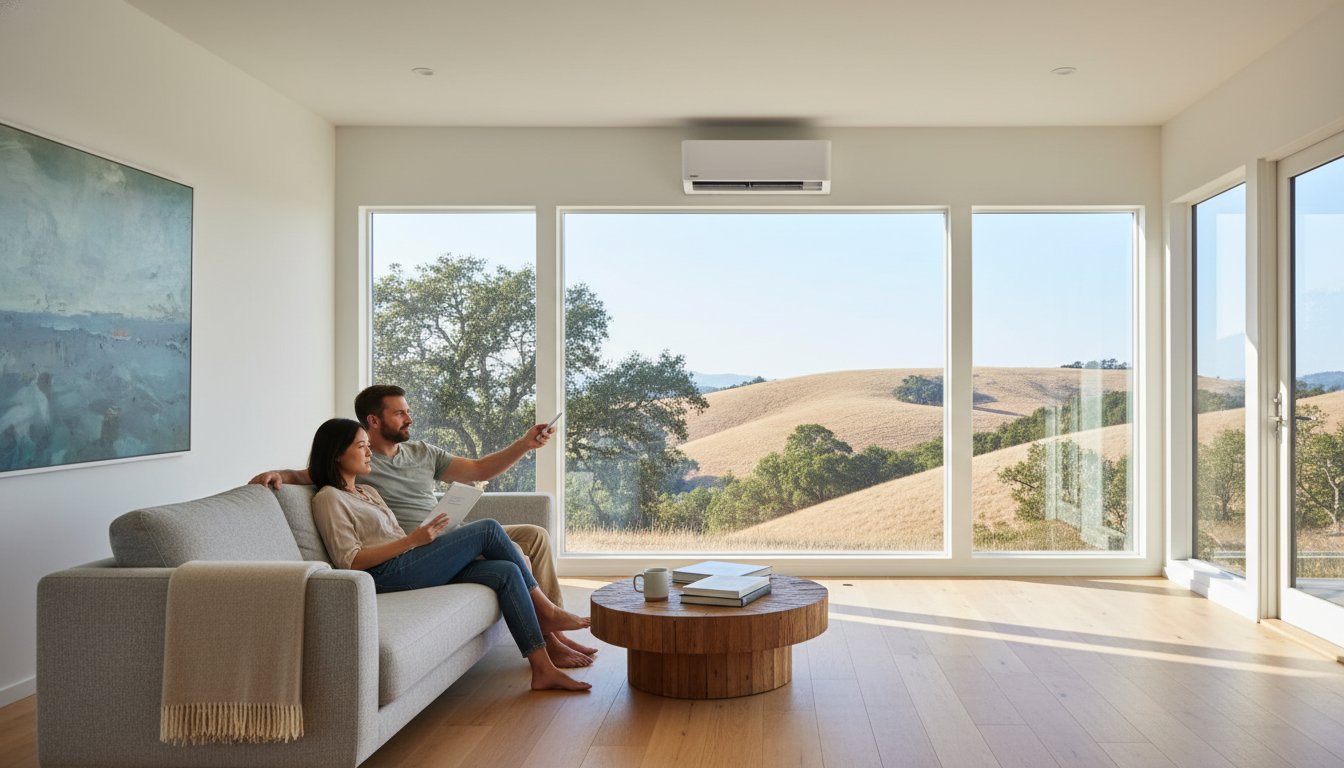
Could your traditional central air system be the main reason your utility bills reached a record high last month? In 2026, many Northern California homeowners are realizing that old-fashioned ductwork is no longer the most efficient way to manage our unique microclimates. If you’re tired of uneven temperatures or noisy units that struggle to keep up with regional heat waves, a mini split system installation Bay Area offers a precision-engineered solution. It’s time to stop paying for cooling in rooms you aren’t using and start investing in a system designed for the modern California home.
We understand that navigating local permitting in counties like Marin or keeping up with new Title 24 efficiency mandates feels overwhelming. This guide simplifies the process by showing you how to leverage the 30 percent federal tax credit and identify available TECH Clean California rebates. You’ll learn how these ductless systems provide whisper-quiet operation and personalized zoning while meeting the latest 2026 refrigerant regulations. From understanding SEER ratings to finding a contractor who truly understands local electrification mandates, we’ve outlined everything you need for a seamless and successful upgrade.
Key Takeaways
- Learn why Bay Area homeowners are transitioning from gas furnaces to high-efficiency electric heat pumps to meet 2026 standards.
- Discover the advantages of independent room temperature control and whisper-quiet operation that traditional central AC units cannot provide.
- Compare the streamlined one-to-two day installation timeline of ductless systems against the weeks required for full ductwork replacement.
- Understand the essential steps for a successful mini split system installation Bay Area, including professional load calculations and navigating current rebate programs.
- Identify the qualities of a dedicated local HVAC partner who provides the technical expertise and responsiveness needed for long-term system reliability.
The Rise of Mini-Split Systems in the San Francisco Bay Area (2026)
A ductless mini-split is a high-efficiency heat pump system designed to provide targeted climate control without the need for traditional, bulky ductwork. These systems consist of an outdoor compressor and one or more indoor air-handling units, connected by a small conduit. They represent a significant advancement in home comfort because they handle both heating and cooling within a single, compact system. For homeowners looking to understand the mechanics, learning how heat pump technology works is helpful. These units don’t create heat through combustion; instead, they move thermal energy from one place to another, which makes them incredibly efficient compared to older technology.
We’re currently witnessing a major “Bay Area Shift” as residents move away from aging gas furnaces in favor of electric heat pumps. This transition is particularly visible in Alameda and Solano counties, where the boom in Accessory Dwelling Units (ADUs) and backyard home offices has created a need for flexible HVAC solutions. A mini split system installation Bay Area allows you to condition these specific spaces without the massive expense of extending existing ductwork or overtaxing a central system. It’s a surgical approach to comfort that fits the modern, multi-functional home.
Meeting 2026 Electrification Goals
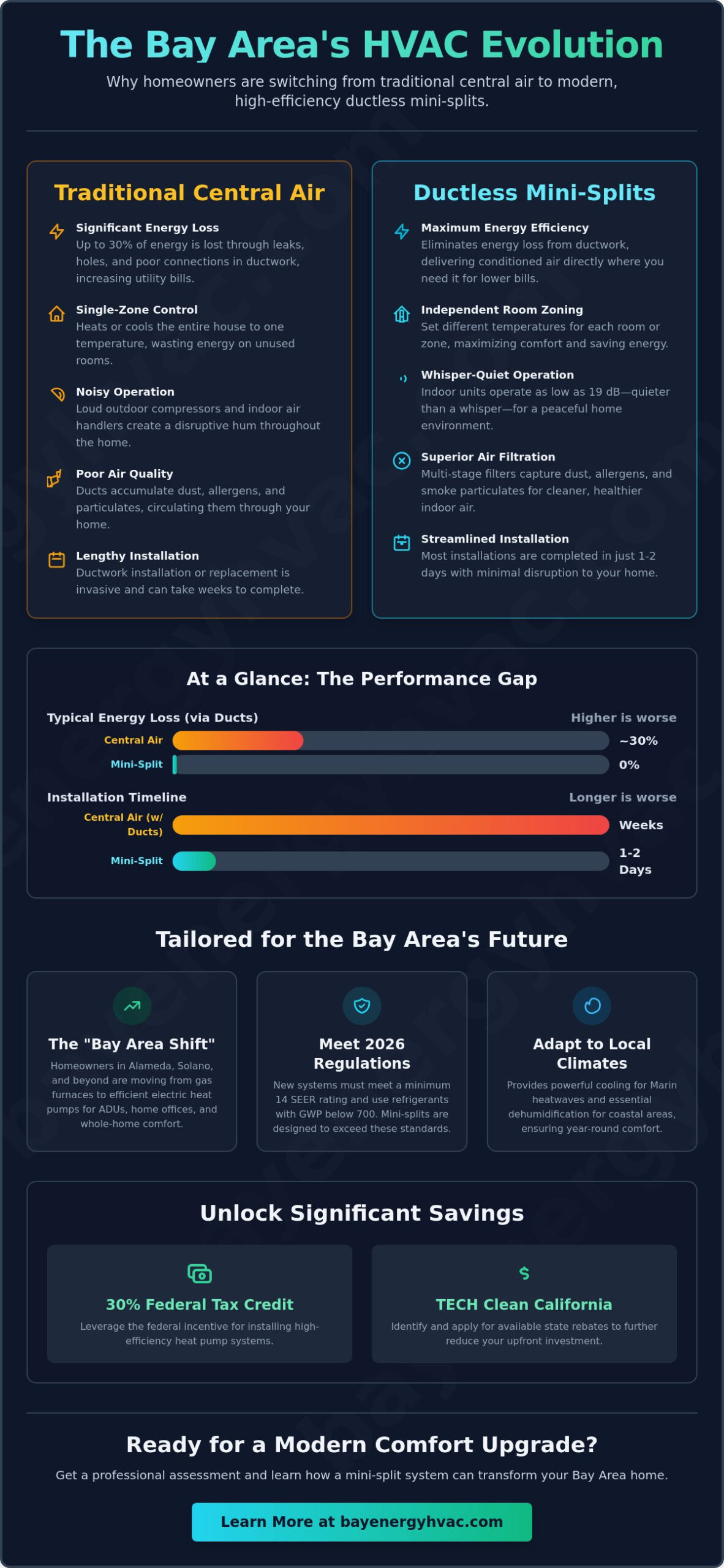
California continues to lead the nation in decarbonization, and local jurisdictions in Marin and Contra Costa are pushing hard for full home electrification. These mandates aim to reduce reliance on fossil fuels by making electric heat pumps the default choice for heating and cooling. As of January 1, 2026, new residential heat pump installations must meet a minimum SEER rating of 14 to comply with updated state energy codes. Additionally, any system installed after this date must utilize refrigerants with a global warming potential (GWP) of 700 or lower. These regulations ensure your home remains compliant with state law while significantly lowering your carbon footprint.
Adapting to Changing Local Climates
Local weather patterns are becoming less predictable, and areas like Marin that were once considered “naturally cool” now face intense summer heatwaves. Many older homes in these neighborhoods weren’t built with cooling in mind, leaving residents vulnerable during peak temperature events. A mini split system installation Bay Area provides the rapid cooling capacity needed to handle these sudden shifts. Beyond temperature, these systems offer vital dehumidification for coastal properties in Alameda. By pulling excess moisture from the air during damp mornings, they protect your home’s interior and ensure the air stays crisp and comfortable regardless of the fog rolling in from the bay.
How Ductless Technology Solves Bay Area Comfort Challenges
Bay Area homes present unique architectural and environmental hurdles. From the historic Victorians of Alameda to the mid-century modern designs in Marin, every property requires a custom approach to temperature control. Traditional ducted systems often struggle with energy loss and invasive installation requirements. In contrast, a mini split system installation Bay Area preserves the structural integrity of your home while delivering high-performance climate control. These systems eliminate the need for bulky metal ducts that often leak air and harbor dust.
By choosing Energy Star certified mini-split systems, you’re opting for technology that avoids the typical 30 percent energy loss associated with ducted distribution. This efficiency is paired with near-silent operation. While older central units create a noticeable hum that can disrupt sleep or outdoor gatherings, indoor mini-split handlers operate at decibel levels as low as 19 dB. It’s a level of quiet that central air simply cannot match.
Indoor air quality is another significant factor for Northern California residents. Wildfire season has made high-quality filtration a necessity rather than a luxury. Ductless units feature multi-stage filtration systems that trap allergens, dust, and fine smoke particulates. This provides a clean sanctuary for your family when outdoor conditions become hazardous. Because there are no ducts to collect debris, the air entering your living space remains consistently cleaner over time.
Architectural Preservation in Older Homes
Preserving the character of a historic home is a priority for many homeowners in the North Bay. Installing central air usually involves dropping ceilings or losing precious closet space to accommodate ductwork. Ductless technology requires only a three-inch penetration through an exterior wall. This minimal footprint protects original plaster and woodwork. You can select from various indoor styles, including wall-mounted units, floor-mounted consoles, or discreet ceiling cassettes that blend seamlessly into your decor.
The Zoning Revolution for Multi-Level Living
Many two-story homes in the region suffer from extreme temperature imbalances. The upstairs often stays uncomfortably warm while the downstairs remains chilled. Multi-zone outdoor compressors solve this by powering up to eight individual indoor units. This allows for true zoning. You can set the bedroom to a cool 68 degrees while keeping the home office at 72. This level of control reduces monthly bills because you aren’t conditioning empty rooms. If you want to see how these configurations work in a layout like yours, you can consult with our specialists to design a custom zone map.
Comparing Mini-Splits to Traditional HVAC for Local Homes
Traditional HVAC systems have served Northern California for decades, but the efficiency gap between ducted and ductless technology is widening. When you choose a mini split system installation Bay Area, you’re bypassing the biggest flaw in central air: the ductwork itself. Energy experts estimate that ducted systems lose up to 30 percent of their cooling energy through leaks or heat transfer in unconditioned attics and crawlspaces. By delivering air directly to the room, mini-splits eliminate this waste entirely. Understanding how ductless mini-split systems work helps clarify why they are becoming the superior choice for managing high local utility rates.
The timeline for these projects also differs significantly. A full central AC replacement involving new ductwork can disrupt your home for a week or more. In contrast, a multi-zone mini-split installation is usually completed in one to two days. This speed doesn’t come at the expense of longevity. Modern 2026 units are engineered for a lifespan of 15 to 20 years when properly maintained. While central furnaces rely on a “Gas vs. Electric” debate that is increasingly leaning toward electrification, mini-splits offer a future-proof solution that aligns with California’s long-term energy goals.
Efficiency and Operational Costs
The primary driver of lower monthly bills is inverter-driven compressor technology. Unlike traditional units that blast at 100 percent capacity and then shut off, inverters modulate their speed to match the exact cooling load of the room. This prevents energy spikes and maintains a steady temperature. As a “Dedicated Expert” in the field, we focus on sizing these systems to ensure you get the maximum return on investment. With SEER2 ratings on 2026 models often exceeding 20, the operational savings compared to a standard 14 SEER central unit are substantial. These systems translate technical efficiency into actual bank account relief for homeowners dealing with rising energy costs.
Installation Complexity and Home Impact
Mini-splits are the preferred choice for specific applications like garage conversions, workshops, or home additions where extending existing ductwork isn’t feasible. A standard furnace changeout requires significant space for the air handler and plenum, while a ductless unit only needs a small patch of wall space. These systems are also incredibly reliable during the mild Bay Area winters. Since our temperatures rarely drop below freezing for extended periods, heat pump technology operates at peak efficiency year-round. You get consistent warmth without the carbon footprint of a gas-fired furnace, making it a cleaner and more responsive option for our regional climate.
Planning Your Installation: Permits, Rebates, and Logistics
A successful mini split system installation Bay Area depends on a meticulous five-step plan. We don’t believe in guesswork. The process begins with a professional load calculation. This technical assessment determines the exact BTU requirements for every room based on square footage, insulation quality, and window placement. If a system is oversized, it will short-cycle and waste energy; if it’s undersized, it won’t keep you comfortable during a Solano County heatwave. Precision at this stage is the foundation of long-term reliability.
Next, we navigate the financial landscape. As of mid-2026, the federal Energy Efficient Home Improvement credit (25C) allows you to claim 30 percent of your project cost, capped at $2,000 annually. We also look at state-level support. While HEEHRA rebates for single-family homes are currently on a waitlist, the TECH Clean California program remains active. This program provides point-of-sale rebates ranging from $1,000 for standard income households up to $4,000 for low-income residents.
Securing permits is the third critical step. Whether you’re in Contra Costa, Alameda, Solano, or Marin, local building departments require documentation to ensure the system meets the latest Title 24 energy codes. Our team handles the entire permit and compliance process so you don’t have to manage the paperwork. Once approved, the physical installation involves mounting the units and charging the refrigerant lines with modern, low-GWP fluids. Finally, we conduct a thorough post-installation test and walk you through the system controls to ensure you’re confident in operating your new technology.
Maximizing 2026 Local and Federal Incentives
The 2026 incentive landscape is complex but rewarding. Beyond the $2,000 federal tax credit, many municipal utilities in the North Bay offer their own rebates to encourage the shift away from gas. For example, Marin County homeowners often find specific local incentives for electrification projects that stack with federal credits. It’s essential to verify the current status of these funds before starting, as program budgets can fluctuate. Our team stays updated on these shifts to help you capture the highest possible savings based on your specific income bracket and location.
The Permit and Compliance Process
Skipping the permit process is a significant risk. California law requires a C-20 licensed contractor for any HVAC project exceeding $500, and inspectors must verify compliance with 2026 Title 24 standards. Unpermitted work can void manufacturer warranties and create massive headaches during a future home sale. We prioritize accountability by ensuring every installation meets local safety and efficiency requirements. If you’re ready to start your project with a team that handles all the logistics, schedule a consultation for your mini-split installation today.
Why Bay Energy Heating and Air is the Choice for Ductless Excellence
Selecting the right partner for a mini split system installation Bay Area is a decision that impacts your home’s comfort and value for decades. At Bay Energy Heating and Air, we position ourselves as a Dedicated Expert in the specific nuances of ductless technology. Unlike general contractors who treat every project with a one-size-fits-all approach, our team undergoes specialized technical training focused on high-efficiency heat pump systems. This expertise ensures that every refrigerant line is perfectly vacuumed and every indoor unit is placed for optimal airflow. We take accountability for the long-term reliability of your system, providing 24/7 responsiveness to address any concerns that arise after the initial setup.
We also act as a Patient Guide through the often-confusing shift toward full home electrification. The transition from gas-fired furnaces to electric heat pumps involves more than just a hardware swap. It requires a deep understanding of electrical load requirements and regional energy standards. Our team specializes in mini split system installation Bay Area, ensuring every component meets the highest standards of the 2026 energy codes. We take the time to explain every step, ensuring you feel confident in your investment. Our goal is to alleviate the stress of home infrastructure upgrades by offering a steady, methodical path to a more efficient living space.
Our Local Expertise in Contra Costa, Alameda, Solano, and Marin
The Northern Bay Area is a patchwork of micro-climates. A home in the fog-swept hills of Marin has different dehumidification needs than a property in the sun-drenched valleys of Solano or Contra Costa. We’ve spent years working with the diverse architectural styles found in Alameda and beyond, from mid-century bungalows to modern ADUs. This local familiarity allows us to anticipate challenges before they become problems. Choosing a local partner means you have someone nearby for ongoing maintenance and troubleshooting who actually understands the specific environmental factors affecting your equipment. We encourage you to look at our local project galleries to see how we’ve solved comfort issues for your neighbors.
The Bay Energy Professional Installation Standards
Our commitment to excellence is reflected in our rigorous diagnostic and installation process. We treat your home with the architectural respect it deserves, ensuring that every wall penetration is sealed and every component is mounted with precision. We maintain a clean workspace from start to finish, leaving your home in better condition than we found it. We don’t just install equipment; we build lasting relationships based on trust and technical proficiency. Ready for a more comfortable home? Schedule your Bay Area mini-split consultation with Bay Energy today!
Secure Your 2026 Home Comfort and Efficiency
The transition toward electrification in Northern California is more than a regulatory requirement; it’s a strategic move to enhance your home’s value and daily livability. By moving away from inefficient gas furnaces and leaky ductwork, you gain whisper-quiet performance and the ability to control the temperature of every room independently. A professional mini split system installation Bay Area ensures your property is ready for the micro-climates of the future while significantly lowering your monthly energy consumption.
You don’t have to navigate complex 2026 mandates or technical load calculations alone. Our team serves Contra Costa, Alameda, Solano, and Marin Counties as dedicated specialists in heat pump and mini-split technology. We provide 24/7 local support and expert troubleshooting to give you total peace of mind throughout the entire process. If you’re ready to upgrade your home with the precision it deserves, Get Your Professional Mini-Split Installation Quote Today. We’re here to help you build a more comfortable, sustainable future for your family.
Frequently Asked Questions
How much does a mini-split system installation cost in the Bay Area in 2026?
The total investment for a mini split system installation Bay Area depends on the number of indoor zones, the system’s capacity, and the complexity of the electrical upgrades required. While single-zone units for ADUs are more straightforward, multi-zone systems for entire homes require more extensive labor and materials. We provide detailed estimates after a professional load calculation to ensure you’re only paying for the capacity your home actually needs.
Do I need a permit for ductless mini-split installation in Contra Costa County?
Yes, all jurisdictions in Contra Costa County require a building permit for HVAC installations to ensure the system meets 2026 Title 24 energy standards and local safety codes. Proper permitting is essential for maintaining your manufacturer warranty and protecting your home’s resale value. Our team handles the entire application and inspection process to ensure your installation is fully compliant with local regulations.
Can a mini-split system replace my gas furnace entirely?
Modern ductless heat pumps are engineered to replace gas furnaces entirely by providing both high-efficiency heating and cooling. These systems are a central part of California’s electrification push, offering a cleaner alternative that eliminates the need for fossil fuels. Because they move heat rather than creating it through combustion, they provide consistent warmth even during the coldest Northern California nights.
How long does it take to install a multi-zone mini-split system?
A typical multi-zone installation is usually completed within one to two business days. This is significantly faster than traditional central air replacements because it doesn’t involve the invasive process of installing or repairing ductwork. Our technicians focus on a clean, efficient workflow that minimizes disruption to your daily routine while ensuring all refrigerant lines are properly tested and charged.
Are there specific rebates for heat pump installation in Marin County?
Marin County residents can take advantage of the $2,000 federal Energy Efficient Home Improvement tax credit and various state-level incentives. The TECH Clean California program offers point-of-sale rebates that vary based on household income levels. While some programs like HEEHRA currently have waitlists, we help you identify and apply for all active local utility incentives to maximize your total savings.
What maintenance is required for a ductless mini-split system?
Basic maintenance involves cleaning the reusable air filters every four to six weeks to maintain optimal airflow and efficiency. You should also schedule a professional inspection once a year to check refrigerant levels, clean the outdoor coils, and ensure the condensate drains are clear. Regular care ensures your mini split system installation Bay Area continues to operate at peak performance for its full fifteen to twenty year lifespan.
Is a mini-split system powerful enough to heat my home during a Bay Area winter?
Yes, today’s heat pump technology is exceptionally effective in the mild winter micro-climates of the North Bay. These systems are designed to provide reliable heat even when outdoor temperatures drop well below freezing. Since our regional winters rarely reach those extremes, a mini-split system operates with high efficiency throughout the entire heating season without the need for a backup heat source.
How do mini-splits improve indoor air quality during wildfire season?
Mini-splits use advanced multi-stage filtration to trap fine smoke particulates, dust, and allergens before they enter your living space. Because these systems don’t rely on ducts, they eliminate the risk of circulating the debris and contaminants that often build up in traditional HVAC vents. This creates a pressurized, filtered environment that serves as a clean air sanctuary during periods of poor outdoor air quality.